

How War with Iran Impacts the Arizona Housing Market
Global conflicts can feel distant, but they often ripple into local real estate markets through mortgage rates, construction costs, and buyer confidence. For Arizona homeowners and buyers, the effects could be mixed — with some surprising potential upside.
Possible Short-Term Challenges
A continued conflict in the Middle East will push energy prices higher, contributing to inflation and upward pressure on mortgage rates. If rates rise, some buyers may pause their home search, slowing sales activity in the near term.
Higher fuel and material costs could also make new home construction more expensive. That may delay projects across the Phoenix metro area and reduce the number of new homes coming to market.
With recent elevated energy costs, this affects inflation readings which the Fed uses to set rates policies. A sudden jump in inflation could cause a temporary reversal of the interest rate reductions, leading to stagnant interest rates or even higher borrowing costs to buying a home.
Why Arizona Housing Could Benefit
Despite these risks, Arizona may actually see positive effects. Real estate values often rise in times of inflation, as it’s considered a safe tangible asset.
Reduced construction could also strengthen existing home values. If fewer homes are built due to higher costs or economic uncertainty, the already limited housing supply in many Arizona communities could tighten further, helping support prices by lack of supply.
During times of global uncertainty, people and capital often move toward stable, business-friendly regions. Arizona’s strong population growth, relative affordability compared to coastal markets, and lifestyle is likely to continue attracting buyers.
If economic growth slows too much because of global instability, policymakers may continue to lower interest rates to stimulate the economy. Lower mortgage rates historically bring buyers back into the market quickly.
The Bottom Line
Any impacts to the local Arizona real estate market would likely be slow and subtle, based on the duration of the conflict. Local factors play a larger role in crafting the real estate landscape.
A continued war involving Iran could create short-term hesitation, however Arizona’s long-term housing fundamentals like population growth, limited supply, and ongoing migration, position the market to remain resilient or even strengthen once uncertainty fades.
For both buyers and sellers, I don’t recommend on making any real estate decisions based upon on global headlines, and always advise to make moves when it makes sense to you, your family, and your personal situation.
Market Update
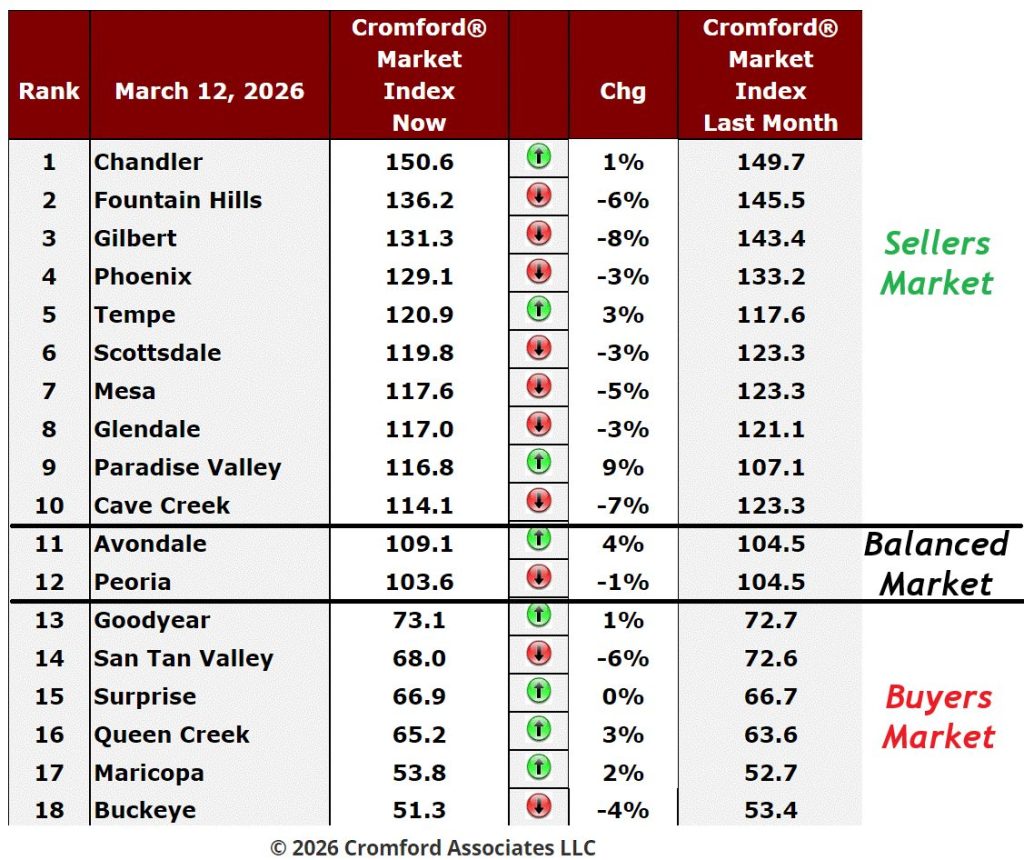
The valley real estate market is split and remains a different story by location. 10 cities are in mild Sellers markets, 2 are balanced, and 6 are in buyers markets. Not all homes in a given city are following suit, and conditions are localized to zip codes neighborhoods. Ultra Luxury is having a year with the amount of homes that have sold for over $10 Million already breaking records.
Buyer demand continues to trend up for the last 18 months, currently at healthy levels, but fluctuations in supply and sticky interest rates are keeping the market in check.
Interest rates are up slightly about 1/10th of a percent from the onset of the Iran conflict, and still down 7/10th of a percent from this time last year. 30 year average rate is around 6.10%. Some new home builders are offering buyers to lock in 30 year interest rates well below current market interest rates, making for an appealing opportunity to finance new homes.
Comments are closed.